June 2, 2026
Outbound and Inbound B2B: One System, Not Two
Everyone says do both. Almost no one shows how the two actually talk to each other, what breaks when they do not, and which of the two to fix first.
By AthonBound Team
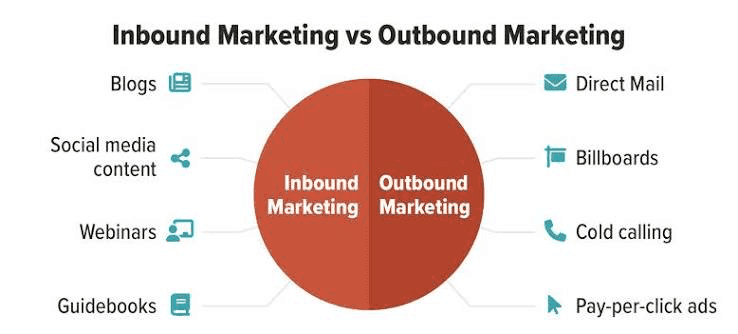
Everyone says "do both." Almost no one shows you how the two actually talk to each other. Here's the system that turns an inbound signal into an outbound action, and back, so no lead falls through the gap.
Quick answer: Outbound and inbound for B2B work best as one connected system, not two separate teams. Inbound attracts buyers who are searching; outbound reaches the larger share who aren't yet. The leverage isn't choosing one, it's wiring them to share a single data layer, so an inbound signal can trigger outbound follow-up and outbound replies feed inbound nurture. Most teams run them as silos and leak pipeline in the gap between.
The real question isn't "which one"
Search "inbound vs outbound for B2B" and you'll get a hundred articles with the same ending: do both, run a hybrid. It's true, and it's also where almost every article stops. Nobody shows you the wiring.
So most teams "do both" by running two disconnected motions. Marketing owns inbound: content, SEO, the demo form. Sales owns outbound: lists, sequences, cold email. Two teams, two datasets, two definitions of a good lead. And in the gap between them, pipeline quietly leaks.
The useful question isn't which channel is better. It's: when an inbound signal fires, does anything outbound happen? And when an outbound reply comes in, does inbound pick it up? If the answer is no, you don't have a hybrid, you have two silos that occasionally email the same person by accident.
What inbound and outbound each actually do
Strip away the ideology and the roles are simple.
Inbound captures the small slice of your market that's actively searching right now, through content, SEO, and product. These buyers convert at high rates because they already have intent. The catch: at any moment only a small fraction of your addressable market is in-market. Inbound also takes months to ramp before it produces meaningful pipeline.
Outbound reaches the much larger share of your market that would buy but isn't searching yet. It's faster to pipeline, gives you precise control over which accounts you target, and tests messaging in real time. The catch: cold, generic outbound converts poorly. What works now is triggered, signal-based outbound, reaching out because something happened, not just because a name is on a list.
Neither covers the whole market alone. Inbound waits for the few who are looking. Outbound reaches the many who aren't. The point of connecting them is to stop choosing which part of your market to ignore.
The mechanism: how a signal becomes an action
This is the part the "do both" articles skip. Here's what actually wiring them together looks like.
Inbound signal → outbound action. Someone visits your pricing page twice, downloads a guide, or their company posts a relevant job. That signal lands in your CRM as a structured field, not a buried note. It triggers an enrichment step (fill in the decision-maker, the direct contact) and drops the account into a targeted sequence, with a human picking up the warmest ones fast. A form submission isn't a meeting; a real follow-up within the hour is what converts it.
Outbound reply → inbound nurture. A prospect replies "not now." Instead of dying in an inbox, they flow into a nurture track: your content, your case studies, your retargeting. When they're ready, inbound catches the warm intent your outbound created.
Shared data layer underneath both. This only works if inbound and outbound read and write to the same CRM, with the same ICP definition and the same scoring. One source of truth means a person who just requested a demo never gets a cold sequence the same week, and a high-fit account showing intent never sits unworked.
That loop, signal in, enriched, scored, routed, action out, and back, is the system. The channels are just entry points into it.
Why most teams never build the loop
The failure is structural, not effort. A few patterns show up every time.
Two teams own two tools with two datasets, so signals never cross. Contact data rots (B2B data decays roughly 30% a year), so triggers fire on wrong people. Nobody agreed on one ICP, so inbound and outbound chase different "good" leads. And the whole thing is measured by channel (inbound MQLs vs outbound replies) instead of by the connected outcome, so each silo optimizes for its own number and the handoff gets ignored.
A connected system fixes these by design: one ICP, one CRM, enrichment on a refresh cycle, and reporting on pipeline, not channel vanity metrics.
What it takes to connect them
| Layer | What it does | Without it |
|---|---|---|
| Shared ICP | One definition both motions use | Inbound and outbound chase different leads |
| Single CRM + data layer | Signals stored as queryable fields | Triggers never cross between motions |
| Enrichment on a cycle | Keeps contacts current | Outreach hits wrong or dead contacts |
| Routing + scoring | Right lead to right action fast | Hand-raisers sit in a queue, leak out |
| Closed-loop reporting | Measures the connected outcome | Each silo claims credit, nothing improves |
How to choose who builds it
A few questions that separate operators from channel specialists:
Ask how inbound and outbound share one data layer in their build, not whether they "do both." Ask to see a signal-to-sequence flow live, not on a slide. Ask whether you own the CRM and workspace at the end. And ask for a case where an inbound signal triggered an outbound action that became a meeting.
See it on real data
We build connected GTM systems where inbound and outbound run off one data layer: signal-based ICP, enrichment, scoring, and triggered outreach wired together so nothing leaks in the handoff. One recent build linked inbound capture to a triggered outbound sequence on the same CRM, with reporting on pipeline rather than channel opens.
FAQ
Is inbound or outbound better for B2B?
Neither alone. Inbound converts the small share of buyers actively searching; outbound reaches the larger share who aren't yet. The leverage is connecting them into one system, not picking one.
Can a B2B company run inbound and outbound at the same time?
Yes, and most should. The mistake is running them as two disconnected teams. Done right, they share one ICP, one CRM, and one data layer so signals pass between them.
How do inbound and outbound work together in practice?
An inbound signal (pricing visit, content download, hiring trigger) can fire an enriched outbound sequence, and an outbound "not now" reply can flow into inbound nurture. Both read and write to the same CRM.
Why do most hybrid B2B setups fail?
Because "hybrid" usually means two silos with separate tools and data. Without a shared ICP, a single data layer, and closed-loop reporting, the two motions never actually connect.
Should I start with inbound or outbound?
Most early-stage B2B teams start outbound for faster pipeline and add inbound in parallel, since inbound takes months to ramp. The goal is to wire them together as inbound matures.
What is signal-based outbound?
Outreach triggered by something that happened, funding, hiring, a tech change, a website visit, rather than a static list. It converts far better than generic cold outbound because the timing is relevant.
Running inbound and outbound as two silos? Get in touch - happy to take a look and show you where the handoff leaks, no pitch. The system underneath is what we cover in GTM system setup for B2B.